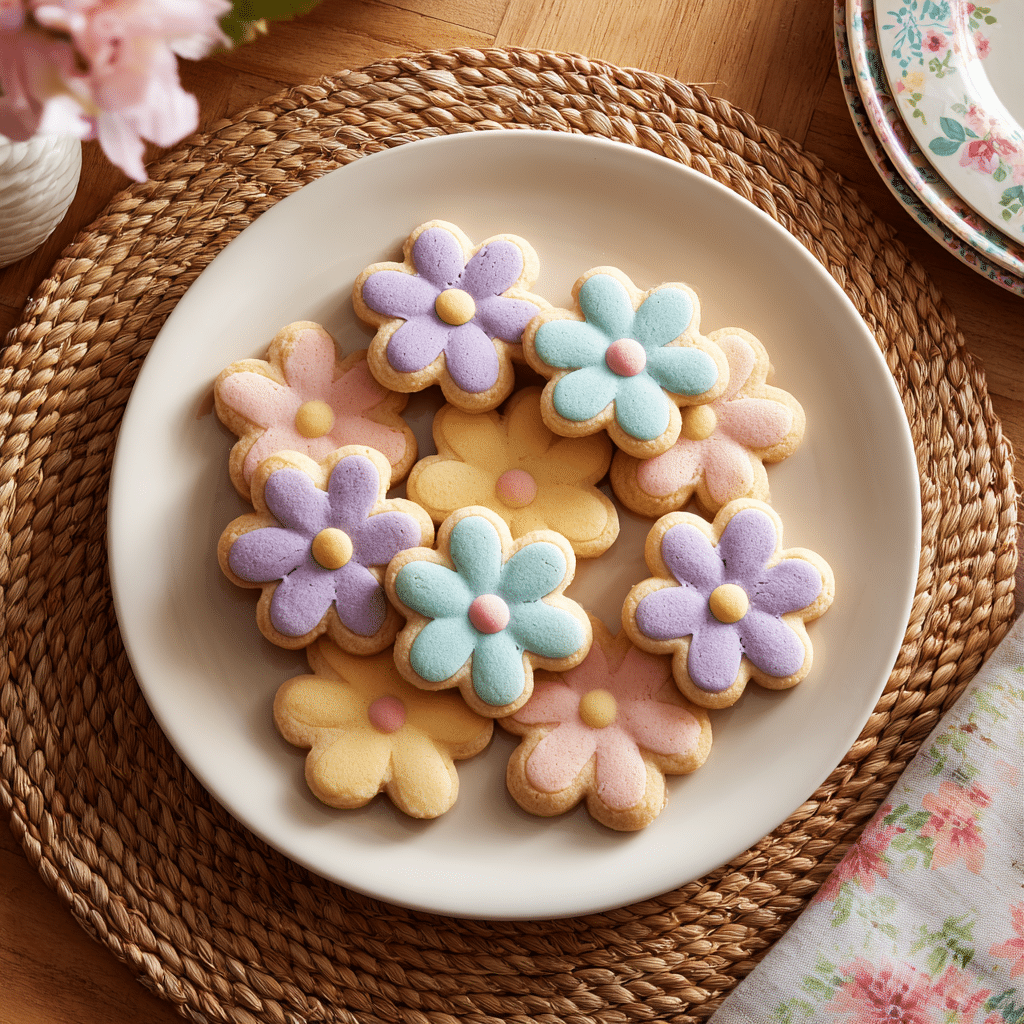
Celebrate the season with these Spring Flower Shortbread Cookies, where crisp, buttery cookies meet delicate edible blossoms for a treat that’s as beautiful as it is delicious. Inspired by the classic simplicity of traditional shortbread, these cookies get a fresh, seasonal twist with pressed flowers, citrus zest, and a hint of vanilla.
They’re perfect for springtime parties, Easter, Mother’s Day, bridal showers, or afternoon tea. And despite their elegant appearance, these cookies are surprisingly easy to make—just 5 ingredients in the dough, and the rest is pure floral magic.
Introduction: A Bite of Spring in Every Cookie
Shortbread is one of the oldest and most beloved types of cookies, with origins tracing back to Scotland. Traditionally made with a 1:2:3 ratio of sugar, butter, and flour, shortbread offers the ultimate melt-in-your-mouth experience.
In this seasonal version, we’re adding an artistic, botanical twist using edible flowers and a touch of citrus zest. Not only do these cookies look like something out of a garden tea party, but they also offer gentle, aromatic notes that highlight the simplicity of the buttery base.
The flowers are pressed onto the cookie before baking, preserving their shape and adding color without overpowering the flavor. The result? A shortbread cookie that tastes classic but looks like a work of art.
Ingredients Overview: Elegant Simplicity
1. Unsalted Butter
-
Use high-quality European-style butter if possible
-
Bring to room temperature before creaming
Why it matters: Butter is the heart of shortbread. It provides richness, tenderness, and flavor.
2. Powdered Sugar
-
Also known as confectioners’ sugar
Why it matters: It creates a smooth, tender crumb and dissolves easily, which is key for delicate cookies.
3. All-Purpose Flour
-
Measured accurately (spooned and leveled)
Why it matters: Too much flour can make the cookies tough. AP flour gives the perfect texture—crisp but delicate.
4. Vanilla Extract
-
Use pure vanilla for the best flavor
Why it matters: Enhances the flavor of the butter and sugar without overpowering the floral accents.
5. Edible Flowers
-
Examples: pansies, violas, chamomile, marigold petals, rose petals, lavender buds
-
Make sure they’re unsprayed and organically grown
Why it matters: Flowers add seasonal color and soft, botanical notes. Choose flat varieties that press well.
6. Citrus Zest (Optional)
-
Lemon or orange zest adds brightness
Why it matters: A little zest pairs beautifully with floral flavors and cuts the richness of the butter.
Step-by-Step Instructions: How to Make Spring Flower Shortbread Cookies
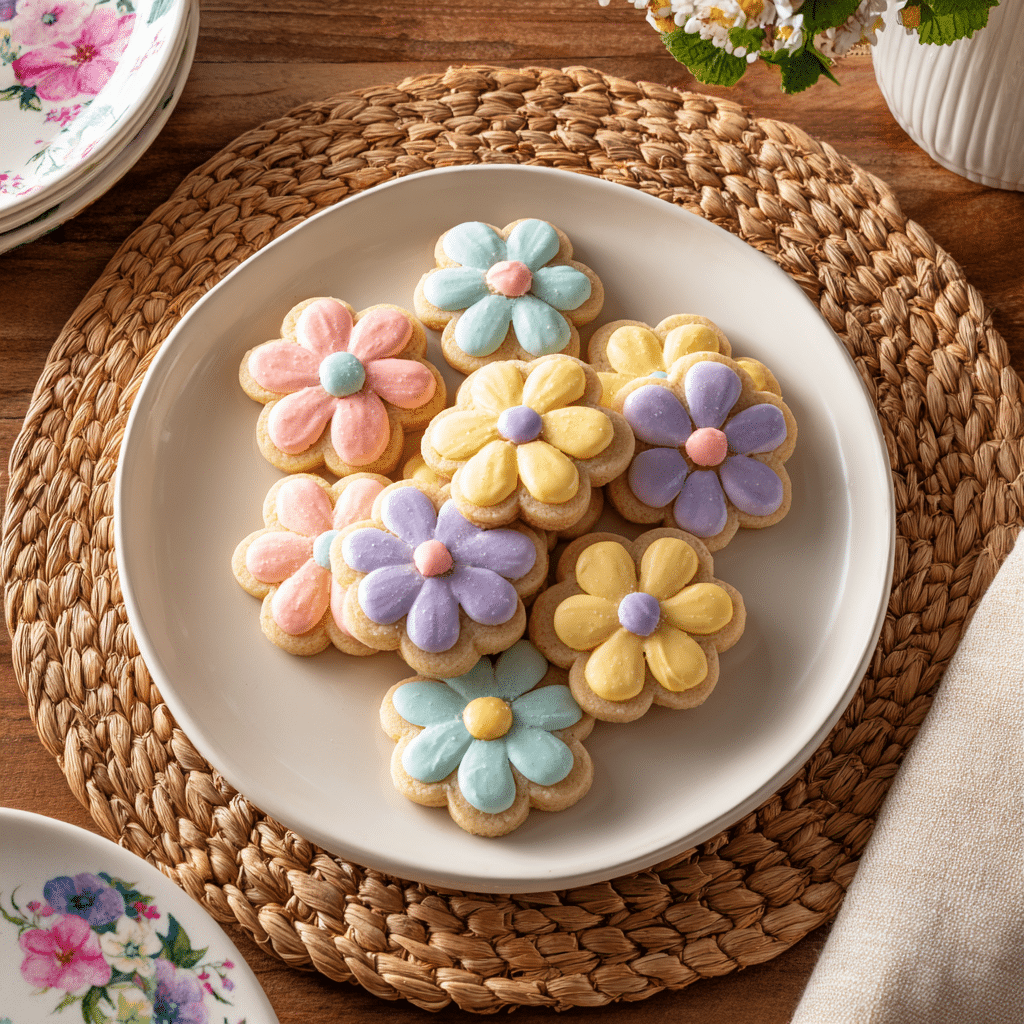
Ingredients (Base Dough)
-
1 cup (2 sticks) unsalted butter, softened
-
½ cup powdered sugar
-
2¼ cups all-purpose flour
-
1 tsp vanilla extract
-
Optional: 1 tsp lemon or orange zest
1. Make the Dough
-
In a mixing bowl, cream the butter and powdered sugar until light and fluffy (2–3 minutes).
-
Mix in vanilla extract and optional zest.
-
Gradually add flour and mix just until the dough forms. It may look crumbly—use hands to gently knead until smooth.
Tip: Avoid overmixing or the cookies will be tough.
2. Chill the Dough
-
Form the dough into a disc, wrap in plastic wrap, and refrigerate for 30–60 minutes.
3. Roll & Cut
-
Preheat oven to 325°F (160°C).
-
Roll dough to ¼-inch thickness on a lightly floured surface.
-
Use round, fluted, or flower-shaped cookie cutters.
-
Place on a parchment-lined baking sheet.
4. Decorate with Edible Flowers
-
Gently press edible flowers or petals onto the top of each cookie.
-
Cover with a piece of parchment and use a rolling pin to lightly press them into the surface without flattening the cookie.
Tip: Make sure flowers are dry and flat. Press gently so they don’t burn or fall off during baking.
5. Bake
-
Bake at 325°F for 12–14 minutes, or until edges are just turning golden.
-
Let cool completely on a wire rack.
6. Optional Finish
-
Dust with powdered sugar for a soft, elegant look
-
Brush lightly with egg white and sugar before baking for a glossy finish
Tips, Variations & Substitutions
Best Edible Flowers for Baking
-
Pansies & violas: Bright colors, flat petals
-
Calendula or marigolds: Bold and citrusy
-
Chamomile: Cute, daisy-like appearance
-
Rose petals: Romantic and classic
-
Lavender buds: Add just a pinch for aromatics
Flavor Twists
-
Add 1–2 tsp dried culinary lavender to the dough
-
Use almond extract instead of vanilla for a nutty profile
-
Stir in finely chopped rosemary or thyme for a savory contrast
Shape Options
-
For tea parties: use flower or scalloped cookie cutters
-
For gifting: heart shapes or squares tied in a stack with ribbon
-
For spring brunch: mini rounds with bright flowers
Gluten-Free Option
-
Use a 1:1 gluten-free baking flour blend
-
Add 1 tbsp cornstarch for a more tender crumb
Serving Ideas & Occasions
These cookies are perfect for:
-
Springtime gatherings & brunches
-
Mother’s Day or baby showers
-
Afternoon tea with herbal or floral teas
-
Gifting in tins or clear treat bags
-
Weddings or bridal showers
Pair with:
-
Chamomile, lavender, or jasmine tea
-
Fresh lemonade or citrus spritzers
-
Lemon curd or honey for dipping
-
Clotted cream and berries
Nutritional & Health Notes
While these are still indulgent treats, they’re made with:
-
No artificial colors or flavors
-
Minimal sugar compared to frosted cookies
-
Naturally gluten-free option available
-
Organic edible flowers = free of pesticides or chemicals
Estimated Nutrition (per cookie, based on 24 small cookies):
-
Calories: 120–130
-
Fat: 7–9g
-
Carbs: 13–15g
-
Sugar: 3–4g
-
Protein: 1–2g
These are intended as a treat and can be stored in an airtight container at room temp for 5–7 days.
FAQ: Spring Flower Shortbread Cookies
1. Are edible flowers safe to bake?
Yes, as long as they’re labeled “culinary grade” or organically grown without pesticides. Avoid florists’ flowers or store-bought bouquets.
2. Will the flowers stay colorful after baking?
Delicate flowers like pansies and violas retain most of their color. Some petals fade slightly but still look beautiful. Pressing them gently helps them adhere better.
3. Can I make the dough ahead of time?
Yes! The dough can be made and chilled for up to 3 days or frozen for up to 2 months. Thaw in the fridge overnight before rolling.
4. Do I need to press the flowers into the dough?
Yes—pressing helps prevent them from curling or falling off during baking. Covering with parchment during pressing also protects the petals.
5. How do I store these cookies?
Keep in an airtight container at room temperature for up to 1 week. For longer storage, freeze undecorated cookies and add flowers later.
6. Can I glaze or ice these cookies?
It’s best to skip heavy glazes if using flowers, as it can obscure them. A light lemon icing drizzle or powdered sugar dusting works beautifully.
7. Are these cookies very sweet?
Shortbread is mildly sweet and buttery, not overly sugary. The flowers add a light floral essence, making them elegant and balanced.